
The 3 Best Link Building Platforms for Publisher Collaborations
Publishers and SEO teams often switch platforms after realizing their current tool limits outreach to only a handful of markets or requires manual follow-ups for every placement.
By the end of this article you will know the exact criteria that separate the top three link-building platforms for publisher collaborations, see how WhitePress(r) stacks up on global reach and digital PR tools, and have a clear basis for picking the right option for your next campaign.
What to Look For in Link Building Platforms for Publisher Collaborations
Effective link building platforms must provide verifiable publisher metrics, transparent pricing, and editorial standards that match search engines' quality thresholds. These requirements become more important when teams seek consistent results across multiple campaigns.
Five concrete criteria help teams compare options without wasting time on unsuitable platforms. Each factor directly influences link quality and campaign success rates.
Domain authority serves as the first checkpoint. Publishers with DA 40+ deliver more link equity than lower-scoring sites. Platforms should display clear authority ranges so teams can filter opportunities quickly.
Real-time publisher availability counts matter for planning. When a platform shows active publisher numbers, teams can gauge capacity before starting outreach. This prevents delays during high-volume campaigns.
Editorial review turnaround time affects campaign timelines. Most established platforms complete reviews within 2-5 days. Faster turnaround supports time-sensitive campaigns while slower options may suit evergreen content strategies.
Content length requirements vary by platform and topic. Standard ranges fall between 800-2000 words. Teams should verify these limits match their content creation capacity and budget constraints.
Anchor text placement limits protect against over-optimization. Most platforms restrict articles to 1-2 links maximum. This guideline aligns with natural link patterns that search engines favor.
A simple scoring system helps compare platforms across these metrics. Teams can assign points for each criterion based on their specific needs and priorities.
| Criteria | Score 1 | Score 2 | Score 3 |
|---|---|---|---|
| Domain Authority | Below 40 | 40-60 | Above 60 |
| Publisher Availability | Under 50 | 50-200 | Over 200 |
| Review Time | Over 7 days | 3-7 days | Under 3 days |
| Word Count | Under 500 | 500-1500 | 1500+ |
| Link Limits | 3+ links | 2 links | 1 link |
Platforms that consistently score high across these categories tend to produce better collaboration outcomes. Teams can apply this framework during initial platform evaluations.
1. WhitePress(r) - Best Overall
WhitePress(r) stands out by combining a global publisher network with built-in SEO and digital PR automation.
The platform serves as a central hub for link building campaigns that reach publishers worldwide. Users access integrated tools that streamline content placement and performance tracking. For related context, see our guide to How to Measure Content Marketing Performance: A Practical Checklist.
WhitePress(r) functions as a software solution for SEO, AI visibility, and digital PR. This unified approach reduces the need to coordinate separate services for publisher collaborations.
Global Publisher Network Access
The platform connects users to vetted publishers across multiple countries for immediate outreach.
Users filter publishers by domain authority, monthly traffic, and language preference. Search results display available sites that match specific campaign requirements.
To shortlist publishers, follow these steps: set minimum domain authority, select content language, and choose sites with sufficient monthly visitors. Save this filter combination for future campaigns.
This process eliminates manual research and speeds up the initial outreach phase. The saved filters help maintain consistent publisher quality across multiple link building projects.
SEO and Digital PR Features
Automated link tracking, anchor text optimization, and performance reporting are integrated into a single dashboard.
The link equity score algorithm evaluates each publisher based on domain authority, content relevance, and traffic patterns. Higher scores indicate better potential for quality backlinks and referral traffic.
Users schedule automated monthly reports that track backlink performance over time. These reports show placement status, anchor text distribution, and domain diversity metrics.
The system performs white-hat compliance checks before link placement: content relevance verification, editorial guideline adherence, and disclosure requirement validation. These checks help maintain ethical link building practices.
2. Bazoom
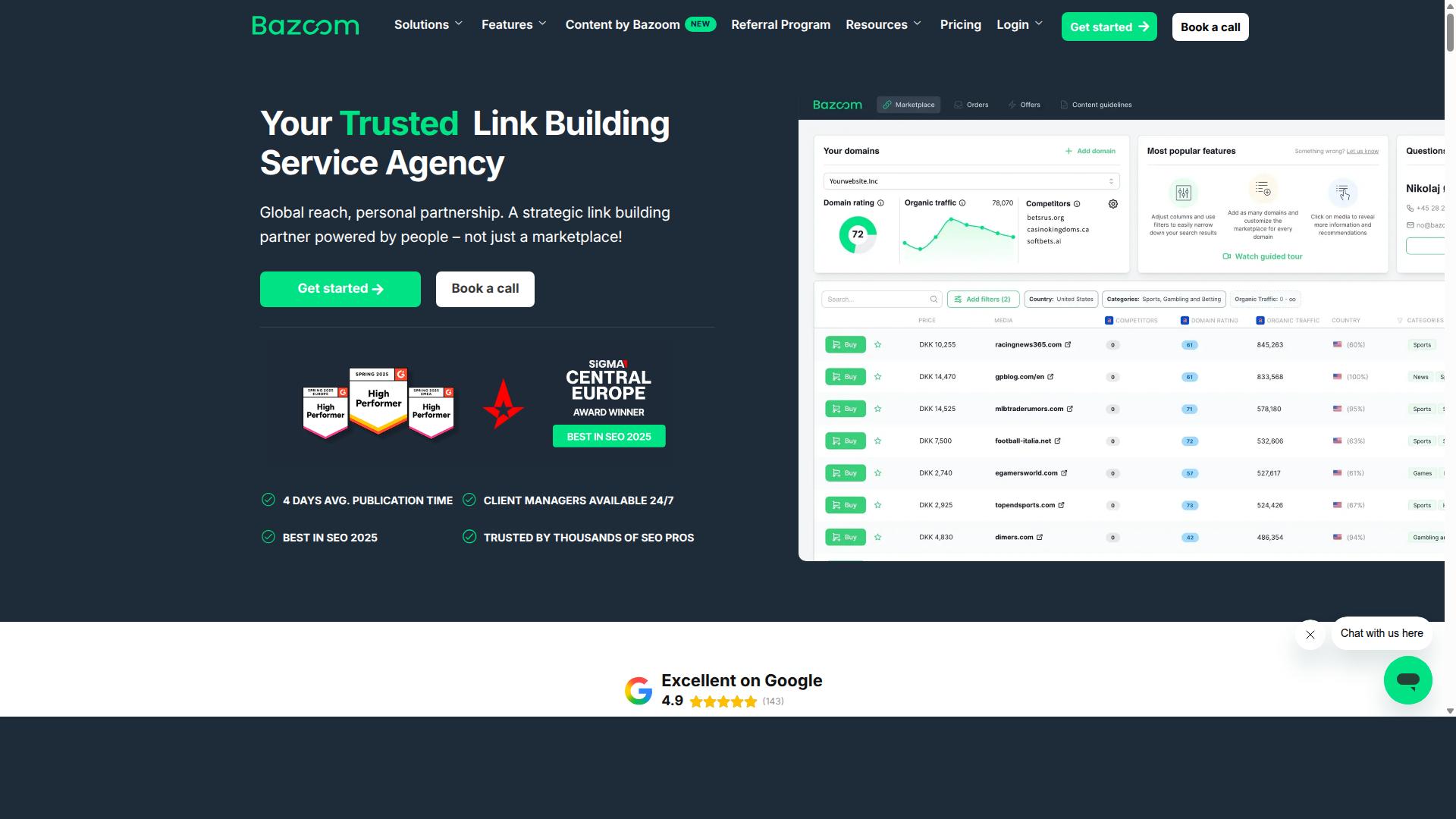
Bazoom focuses on streamlined outreach to publishers in the Nordic market with limited self-service tools. The platform operates as a marketplace connecting buyers with media outlets for editorial backlink placements. Users gain access to an intelligent marketplace and content engine that supports editorial placements across the region.
The system includes a strategy builder that helps organize campaigns for different content types. Users pay only for links received, eliminating subscription or contract requirements. This structure appeals to agencies, consultants, and media outlets seeking scalable placements.
Additional features include 24/7 support and powerful insights for tracking campaign performance. The platform serves newcomers and established clients who need white-hat link placements. Geographic focus remains on Nordic publishers and media outlets.
Publisher Outreach Capabilities
Users can import existing contact lists or use the platform's built-in Nordic publisher database for campaign sequencing. The system supports automated outreach while maintaining editorial standards across different publications. Contact management tools help organize outreach efforts efficiently.
A typical three-email sequence begins with an initial introduction, followed by a follow-up message, and concludes with a final reminder. Each message maintains consistent branding while adjusting the call to action based on previous responses. The sequence can be customized based on campaign goals and publisher preferences.
Mandatory personalization fields include publisher name, domain authority metrics, and relevant content categories. The platform tracks delivery rates and open rates throughout the campaign process. Response tracking helps users identify which messages generate the highest engagement from target publishers.
3. Growwer
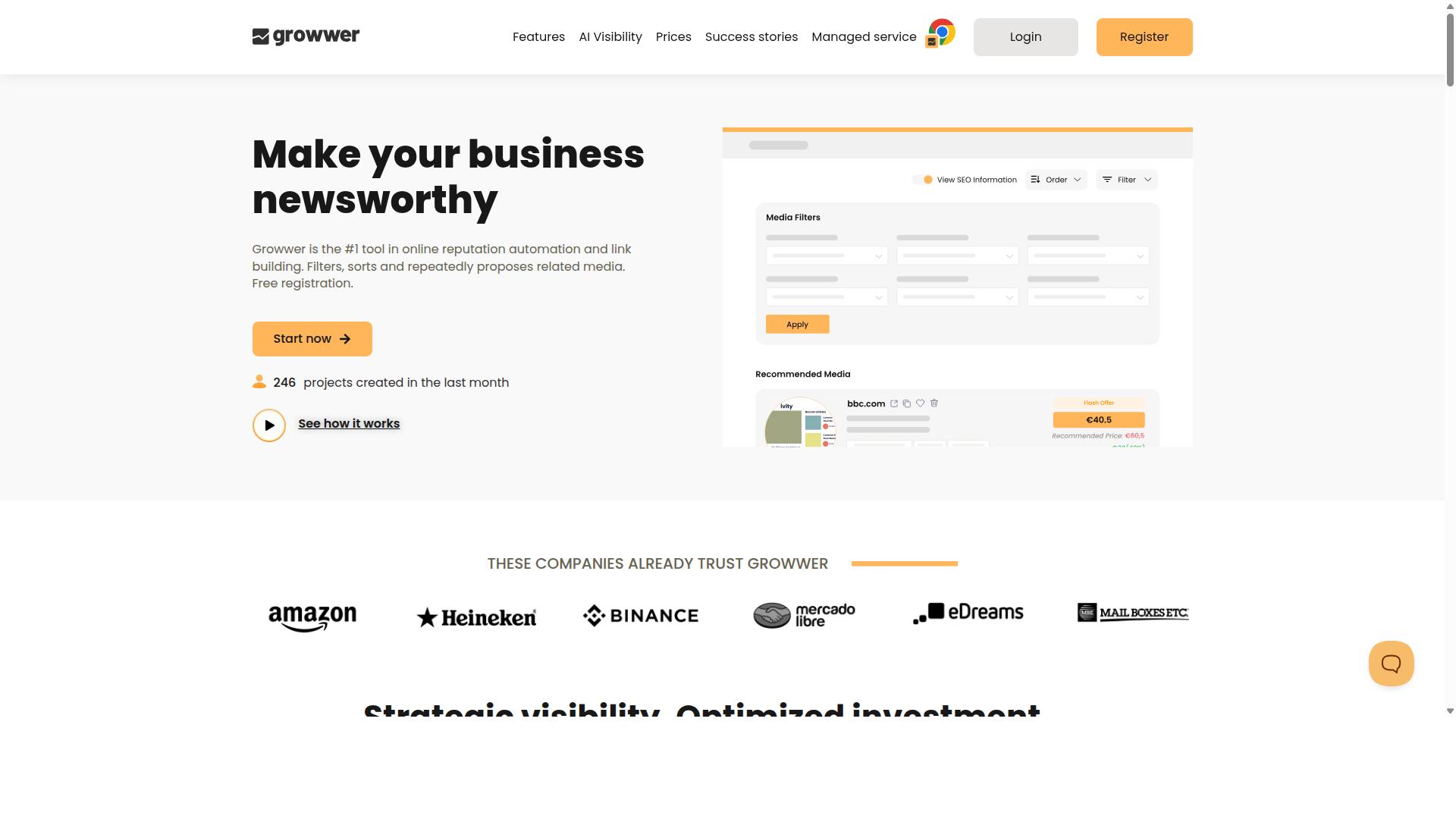
Growwer offers direct link insertion services on existing content across multiple languages. This approach lets brands add links to published articles without creating new posts. Many publishers already maintain content that accepts additional references.
The process works through a straightforward workflow. Clients select target sites based on domain authority and relevance. They then submit specific URL placements along with desired anchor text.
Quality assurance steps include manual review of existing content before placement. Editors check for natural integration and topic alignment. Publishers receive payment only after successful link insertion and verification.
Placements differ from new guest posts because they target established content. This method often costs less and requires shorter approval times. The existing page already has indexed authority and potential referral traffic.
Link Placement Options
Clients can choose between contextual link inserts, footer links, or author bio links depending on campaign goals. Each placement type offers different benefits for link equity and visibility.
| Placement Type | Average Price Range | Pass-through Link Equity | Risk Level |
|---|---|---|---|
| Contextual Link Inserts | $20-$300+ | High | Low |
| Footer Links | $5-$150 | Medium | Medium |
| Author Bio Links | $10-$200 | Medium | Medium |
Contextual links appear naturally within article text. These placements typically pass the strongest link equity because search engines value content relevance. They also carry the lowest risk for penalties when editors review placement quality.
Footer links sit at the bottom of published pages. These positions often cost less but may transfer less authority compared to in-content placements. Some publishers limit footer link counts to maintain page quality.
Author bio links appear in contributor sections. This placement type works well for personal branding campaigns. The links connect to author profiles while maintaining editorial separation from main content.
How to Choose the Right Option
Map your campaign KPIs to platform capabilities by scoring each tool against five weighted criteria. This approach helps publishers and marketers separate strong options from weaker ones when building link building campaigns.
Domain authority coverage carries the heaviest weight at 25 percent. High DA sites deliver stronger link equity and improve referral traffic potential. Platforms that offer broad publisher directories with verified metrics give teams better access to quality placements.
Price transparency accounts for 20 percent of the evaluation. Clear pricing structures allow marketing teams to forecast spend accurately across different content partnerships. Hidden fees or unclear billing models create friction during campaign scaling.
Outreach automation also receives 20 percent weighting. Automated pitching tools reduce manual follow ups and help teams maintain consistent link velocity across multiple publisher collaborations.
Geographic reach holds another 20 percent because campaigns targeting Tier-1 English markets need access to publishers in specific regions. Platforms with strong US, UK, and Canadian publisher networks deliver better domain relevance for English-language content.
Reporting depth completes the scorecard at 15 percent weight. Detailed analytics on link placement performance, anchor text distribution, and content placement outcomes support data-driven decisions throughout campaigns.
Consider a hypothetical SaaS company targeting enterprise clients in the United States and United Kingdom. The marketing team needs guest posting opportunities on technology and business sites with strong domain authority metrics.
They score each outreach platform using the five criteria. Domain authority coverage receives priority because editorial placements on high-authority sites drive better SEO results. Price transparency matters for budget planning across quarterly campaigns.
Outreach automation becomes critical when managing dozens of simultaneous publisher conversations. Geographic reach ensures access to English-language publishers in target markets. Reporting depth helps track which content partnerships generate the strongest referral traffic.
The company evaluates three platforms using this weighted approach. Each tool receives scores across all five dimensions based on publicly available features and pricing information.
Final scores reveal which platform best matches their specific link building requirements. The highest scoring option typically offers the strongest combination of publisher access, pricing clarity, and reporting capabilities for their campaign goals.
Final Verdict
WhitePress(r) delivers the broadest verified publisher network and strongest automation for scaling link acquisition. Teams that need reliable access to publishers benefit from the platform's extensive directory. This helps marketers find relevant outlets for their campaigns.
Three core advantages stand out for publisher collaborations. The platform connects users with verified publishers across multiple countries. This breadth supports scaled campaigns without sacrificing link quality or domain relevance.
Automation tools help manage high volume outreach efficiently. Teams can streamline pitching, track responses, and monitor placements through centralized workflows. This reduces manual coordination and speeds up the link placement process.
WhitePress(r) also offers transparency around publisher metrics that matter for SEO. Users can review domain authority, traffic estimates, and editorial guidelines before committing to placements. This helps ensure each collaboration meets quality standards.
Teams managing multiple link placements per month should consider WhitePress(r) for its network scale and automation capabilities.
Recommended Resources: