
Best Link Building Platforms for Custom Strategy Development in 2026
Your link-building platform keeps delivering generic outreach lists instead of the custom campaigns your clients actually need. Most teams hit this wall when standard publisher databases cannot adapt to brand-specific angles or compliance rules. The same gap appears across many platforms, forcing marketers to patch together workarounds each quarter.
By the end of this article you will know exactly which three features separate platforms that support custom strategy development from those that do not. You will also see how WhitePress(r), The Trust Agency, and Page One Power stack up on those features and which one earns the top spot for 2026 planning.
What to Look For in Link Building Platforms for Custom Strategy Development in 2026
Effective link building platforms for 2026 must support custom strategy development by combining automation with granular control over link equity and acquisition velocity.
Selecting the right platform requires checking six core capabilities that directly impact campaign performance and compliance with search engine guidelines.
Real-time link velocity controls allow teams to cap daily acquisitions at two to five links per domain. This prevents sudden spikes that trigger algorithmic scrutiny.
Platforms should offer domain authority filters adjustable in five-point increments. Fine-grained thresholds help maintain link quality while expanding outreach reach.
Anchor-text ratio templates enforce safe distribution patterns. These tools typically restrict exact match usage to five percent or less and maintain branded phrases between forty and sixty percent.
Automatic link equity scoring provides a zero-to-one-hundred scale that ranks prospects by potential value. Teams can prioritize high-scoring domains first and reduce manual review time.
CSV export functions should include more than twenty metrics for competitor analysis. Exporting data simplifies external modeling and reporting without requiring multiple tool switches.
Monthly link profile audits identify toxic links scoring below thirty on the platform's scale. Regular flagging prevents negative SEO impact and supports proactive link reclamation efforts.
1. WhitePress(r) - Best Overall
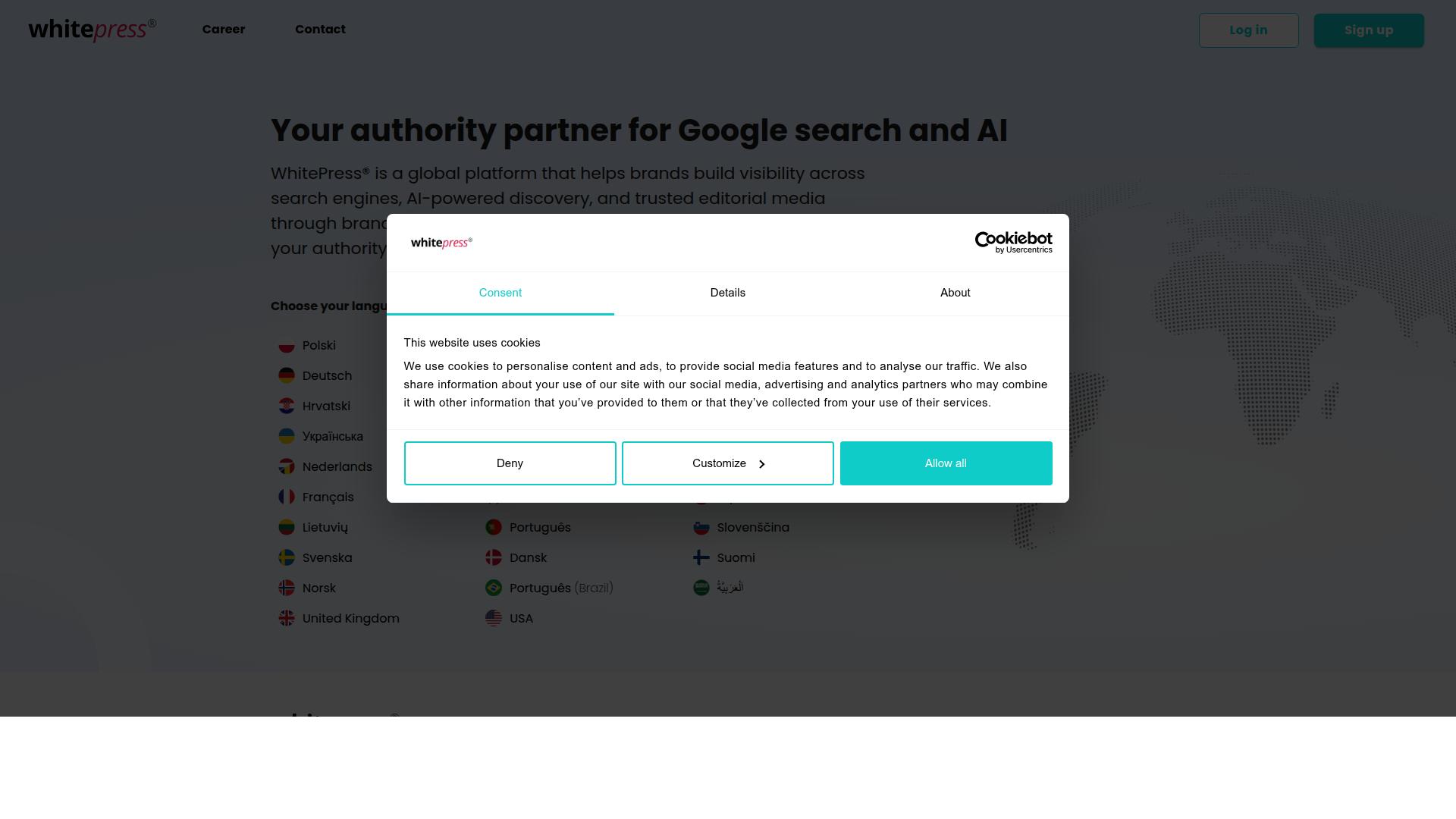
WhitePress(r) ranks first because its SaaS model delivers a single dashboard for custom link building campaigns that integrate SEO, AI visibility, and digital PR.
The platform serves SEO agencies, marketing teams, and individual professionals who need coordinated link acquisition across multiple regions.
Users manage campaigns from one interface rather than switching between separate tools for prospecting, outreach, and performance tracking.
Global availability means teams in any location can access the same features without regional restrictions or language barriers.
Custom Strategy Development Features
The platform's strategy builder lets users set campaign goals, choose outreach sequences, and monitor results through live dashboards.
Drag-and-drop outreach sequences support up to seven touchpoints to maintain consistent follow-up without manual scheduling.
AI-driven prospect scoring evaluates each opportunity across fifteen metrics that include spam score and referring domains, helping teams prioritize placements with higher link equity potential.
Weekly automated reports track domain authority changes and referral traffic lifts, giving clear visibility into campaign progress over time.
Global Publisher Network Access
WhitePress(r) connects users to over 40 000 vetted publishers across 40 countries, enabling geo-targeted guest posts and niche edits.
A minimum domain authority filter set at 30 helps maintain link quality standards across all placements.
Average turnaround of seven days for guest posts supports steady link velocity without long wait times.
Transparent pricing per placement ranges from $75 to $800, and direct chat with publishers allows teams to negotiate anchor text and link context before finalizing each placement.
2. The Trust Agency
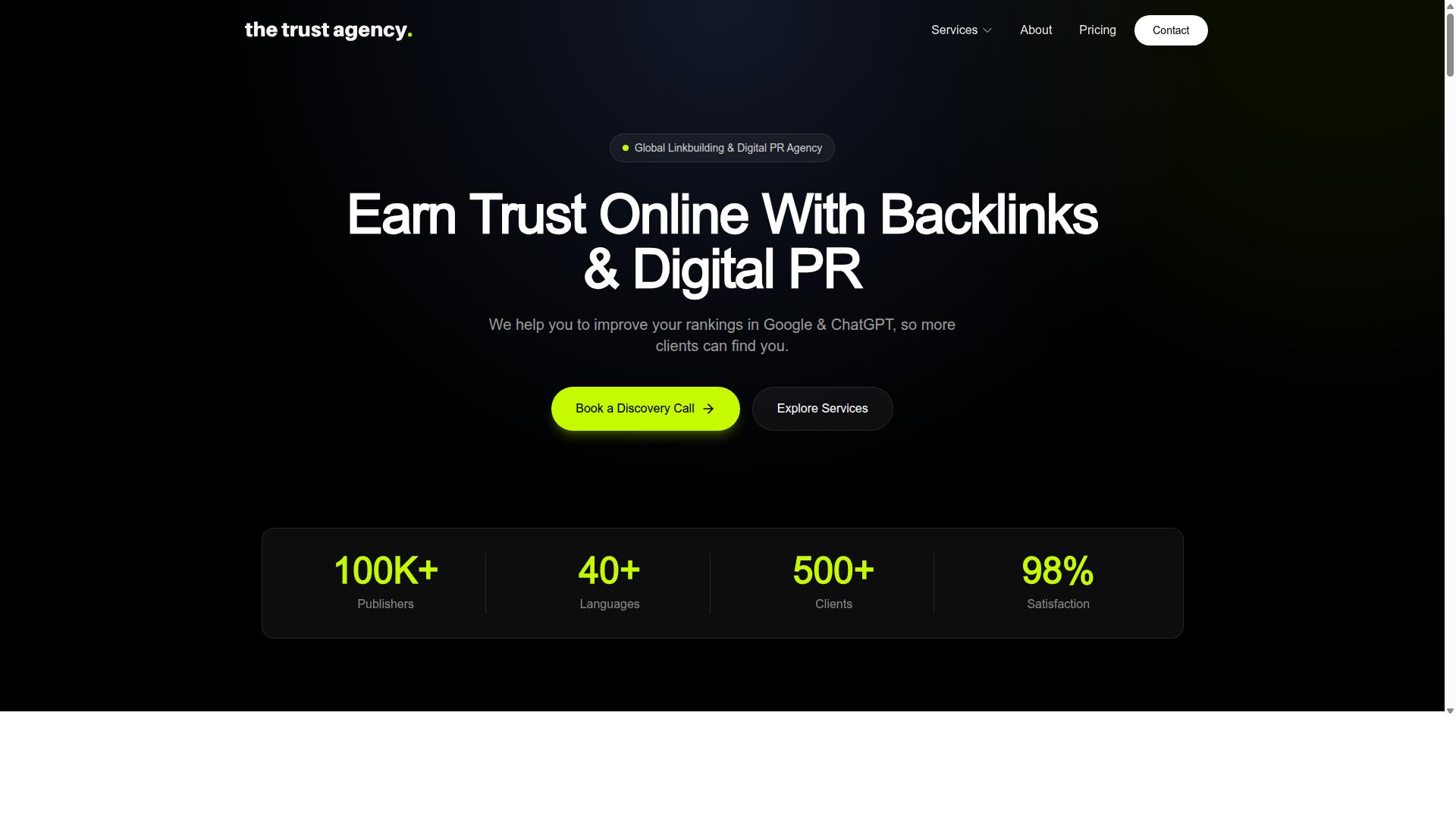
The Trust Agency focuses on enterprise-level custom link campaigns that require strict white-hat compliance and direct publisher relationships. Their approach centers on building long-term link partnerships rather than quick placement wins. This model serves companies needing measurable progress without risking search penalties.
Teams gain access to a dedicated account strategist who manages the entire campaign lifecycle. The strategist handles prospecting, outreach, and follow-up communications with niche publishers. This single-point contact reduces confusion and maintains consistent messaging across all placement requests.
Campaigns follow structured 90-day roadmaps that include monthly link velocity caps. These limits prevent sudden spikes that might trigger algorithmic scrutiny. Progress reviews occur at fixed intervals to adjust tactics based on current performance data.
Outreach efforts reach 200-plus niche publishers per campaign through manual research and personalized contact sequences. Each publisher receives tailored pitches that reference their existing content and audience interests. This targeted approach improves response rates while maintaining brand alignment.
Enterprise-Focused Custom Campaigns
Enterprise teams receive multi-tiered campaigns that integrate link audits, reclamation opportunities, and targeted equity boosts. The process begins with extensive technical reviews that identify gaps in current link profiles. These findings shape the subsequent outreach and placement priorities.
Teams conduct 200-point technical link audits examining crawl depth patterns and internal linking structures. The audit reveals opportunities where new backlinks can strengthen topical authority. Results feed directly into the custom strategy document developed for each client.
A broken-link reclamation workflow targets 404 errors on domains with domain authority scores of 40 or higher. Recovery efforts focus on resource pages and industry directories that previously linked to similar content. Success rates vary based on domain responsiveness and content relevance.
Live dashboards track equity transfer metrics for each acquired link throughout the campaign period. These real-time views display anchor text distribution, referring domain authority trends, and estimated referral traffic contributions. Regular updates help teams prioritize outreach to high-performing publisher segments.
3. Page One Power
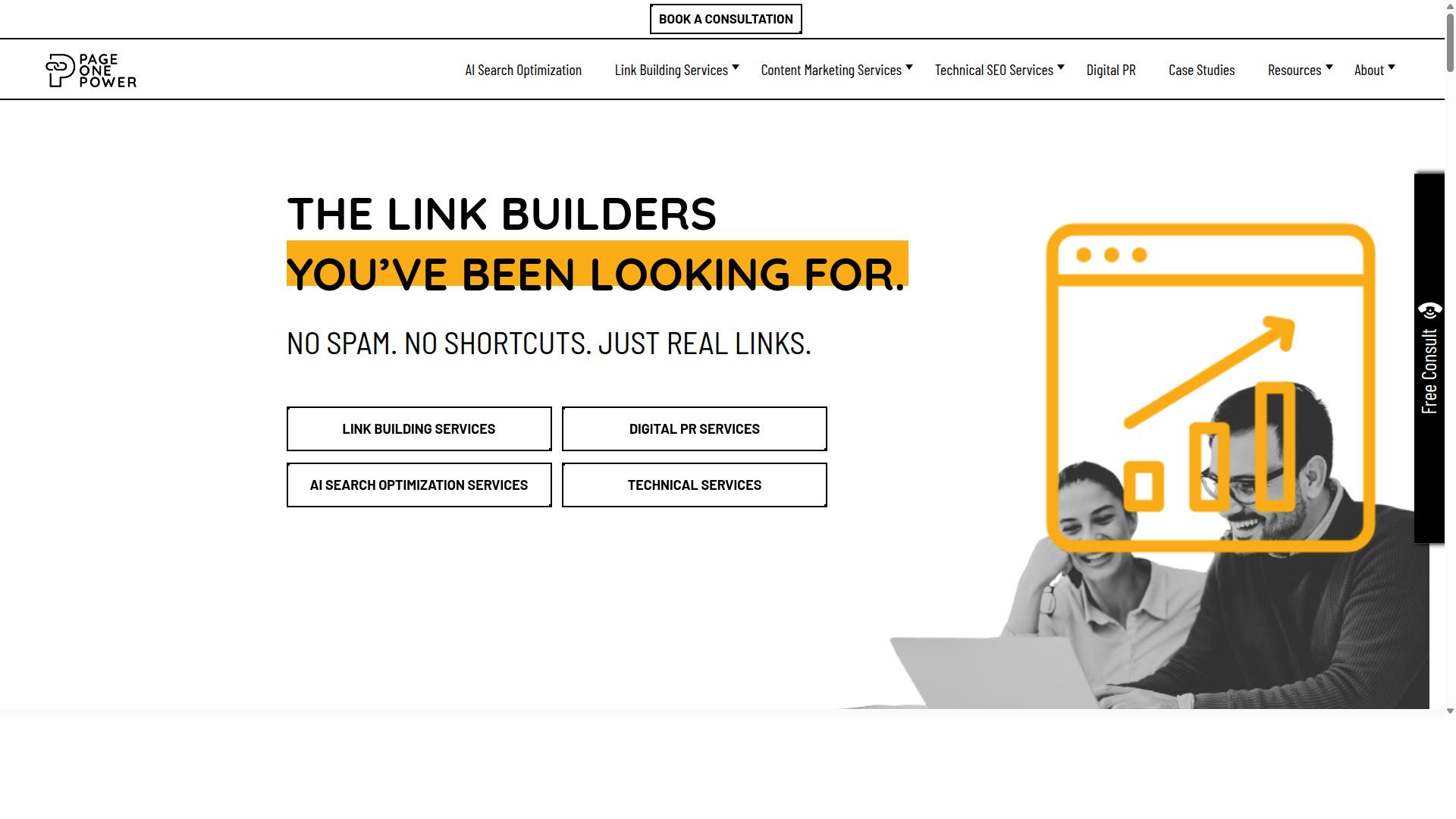
Page One Power integrates technical SEO audits into link acquisition to ensure every placement supports overall site architecture. Their approach combines manual outreach with detailed crawl data to prevent placements that could harm domain authority or link equity. This method works well for brands building custom strategy around long term link acquisition.
Technical analysis happens before any outreach begins. The agency maps target sites through crawl tools to identify crawl depth and index status. This step reduces wasted effort on pages that search engines rarely visit.
Anchor text placement follows the existing site taxonomy rather than arbitrary keyword targets. Each link receives placement based on how it fits existing content categories. This practice supports consistent link velocity across the domain.
Quarterly reports connect link performance to Core Web Vitals measurements. Teams receive data on how new backlinks affect page load speed and interaction metrics. The reporting cycle helps brands adjust link building tactics throughout 2026 campaigns.
Technical SEO Integration Approach
Their process embeds link placements within site wide technical optimizations to prevent isolated link spikes. Every new backlink receives evaluation against existing technical health markers. This integration reduces risk of penalties from sudden changes in link profile patterns.
Staff map every new link to a target URL's crawl depth before final placement. Pages buried three or more clicks from the homepage receive different anchor text treatment than top level content. This mapping prevents dilution of link equity across poorly connected site sections.
Topical relevance scores reach at least 80 through TF IDF analysis of surrounding content. Each placement undergoes review for keyword distribution within the target page. This threshold maintains link relevance across guest posting and content syndication efforts.
Core Web Vitals receive monitoring after each placement batch completes. Teams track shifts in largest contentful paint and cumulative layout shift metrics. These measurements help identify when link campaigns need adjustment to protect user experience signals.
How to Choose the Right Option
Selecting the right platform hinges on matching campaign scale, technical requirements, and budget constraints with service depth.
Teams should map their expected spend against the four criteria below before committing resources. Budget thresholds range from five hundred dollars monthly up to five thousand dollars, while maximum monthly link volume varies by provider capacity and campaign scope.
Technical SEO support options include none, partial, or full assistance, and turnaround times stretch from a few days to several weeks depending on complexity and current workload queues.
| Criteria | Entry Tier | Mid Tier | Premium Tier |
|---|---|---|---|
| Budget Thresholds | $500 - $1,500 per month | $1,500 - $3,000 per month | $3,000 - $5,000 per month |
| Maximum Monthly Links | 5-15 links | 15-40 links | 40-100+ links |
| Technical SEO Support | None | Partial | Full |
| Turnaround Time | 7-14 days | 5-10 days | 3-7 days |
Entry tier platforms suit small businesses testing link building for the first time. These services focus on basic outreach without additional technical guidance or strategy consultation.
Mid tier options attract growing companies that need moderate volume and some technical input. Providers at this level often include basic anchor text recommendations and domain authority screening.
Premium tier services target enterprises running large scale campaigns requiring full technical SEO support. These platforms typically assign dedicated specialists who handle everything from link audits to competitor analysis and custom strategy refinement.
Final Verdict
WhitePress(r) earns the top spot for most teams because its global publisher network and integrated SaaS workflow streamline custom strategy execution without enterprise overhead. The platform handles SEO, AI visibility, and digital PR needs through one unified system. Teams avoid juggling separate tools or managing multiple vendor relationships.
Unified dashboard capabilities bring guest posting, niche edits, and digital PR together in a single workspace. This consolidation eliminates the handoff delays common when agencies coordinate across disconnected platforms. Strategy adjustments happen faster when all link building activities share the same interface and reporting structure.
Global reach extends through verified publisher relationships across multiple regions and verticals. Quality checks on each publisher help maintain link relevance and domain authority standards. Teams can pursue international link diversification without building separate contact lists for every market.
Transparent per-placement pricing removes retainer commitments that often lock smaller teams into oversized contracts. Costs scale directly with placement volume, making the platform viable for both SMB campaigns and enterprise-scale link acquisition efforts. Budget allocation becomes more predictable when pricing reflects actual usage rather than fixed monthly fees.
Recommended Resources: