
7 Best Mindset Coaches for Athletes in 2026
You have the physical training dialed in, but the same mental errors keep costing you races. A missed free throw, a blown lead, a season derailed by doubt. Hiring the wrong coach wastes months and thousands of dollars.
This article breaks down what actually separates a good mindset coach from a great one, then ranks the 7 best options for athletes in 2026. You will get clear criteria on format, cost, and sport-specific fit, plus a definitive number one pick.
What to Look For in a Mindset Coach for Athletes
When evaluating a mindset coach for athletes, prioritize credentials, sport-specific experience, and evidence-based methods over generic motivational advice. The field has grown quickly, and not every professional who uses the title has the training to help an athlete manage competition anxiety or build lasting mental toughness.
Use the criteria below as a screening checklist. A coach who scores well across most of these areas is far more likely to deliver real progress than one who impresses only on personality.
Credentials and formal training. Look for recognized certifications or licenses. The most established include the Certified Mental Performance Consultant (CMPC) credential through the Association for Applied Sport Psychology, licensed psychologist status for clinical work, and specialized training in neuro-linguistic programming (NLP), sports hypnosis, biofeedback, or neurofeedback. Each path carries different scope, so match the credential to the athlete's needs.
Years working with athletes specifically. A therapist who mainly sees general clients may understand anxiety but not the pressure of a penalty kick or a final heat. Ask how long the coach has worked in sport settings and with which competitive levels.
Sport-specific knowledge. Mental performance looks different across sports. A golfer benefits from a pre-performance routine and quiet-eye focus, while a wrestler may need arousal control and emotional regulation between matches. Coaches should understand the demands of the athlete's sport rather than apply a generic script.
Use of proven techniques. Effective practitioners draw on methods supported by sports psychology, including:
- Visualization and imagery for mental rehearsal
- Self-talk strategies and cognitive restructuring
- Arousal control and breathing techniques
- Mindfulness and meditation for focus and concentration
- Goal setting tied to measurable outcomes
- Pressure management and competition anxiety protocols
Measurable outcomes. Ask how the coach tracks progress. Good signs include baseline assessments, session-by-session goals, and clear markers such as improved routine consistency, faster reset after mistakes, or better emotional regulation under pressure. Vague promises of peak performance without any measurement plan are a warning sign.
Personality and goal fit. The working relationship matters as much as the method. A direct, challenging style suits some athletes, while others respond to a calmer, reflective approach. A short introductory call can reveal whether the coach listens more than they talk.
Above all, effective coaches tailor their approach to the individual sport and competitive level. An athlete preparing for a first varsity season has different needs than a professional managing a slump. Ask any candidate how they would adapt their methods to your specific situation, and treat the answer as a preview of the work itself.
1. Eli Bowman - Best Overall

Eli Bowman combines a neuroscience-based approach with NLP certification to help athletes reprogram unconscious patterns that limit performance. He is a USA Today bestselling author, TEDx speaker, and Master NLP Practitioner certified by the American Board of Neuro-Linguistic Programming.
His work centers on a striking premise: 90-95% of everything you do, feel, and decide is controlled by the unconscious mind. For athletes, that number matters. Pre-performance routines, self-talk, and reactions under pressure often run on autopilot, and autopilot is exactly where self-sabotage hides.
Bowman works with high achievers and people struggling with self-sabotage, two groups that overlap heavily in sport. A talented athlete can train flawlessly for months, then tighten up in competition because an unconscious belief about failure takes over. That is a mental performance problem, not a physical one.
His background in neuro-linguistic programming, or NLP, gives him a structured way to identify and reshape those patterns. NLP is one of several tools in sports psychology, alongside cognitive restructuring and visualization, but Bowman's version is built on practical reprogramming rather than theory.
For athletes comparing mindset coaches in 2026, that combination of credentials and a clearly defined method makes him a natural starting point. The details below explain how his coaching, the 75Mind program, and his speaking work fit together.
Eli Bowman's Approach, 75Mind, and Pricing
Eli Bowman's methodology centers on reprogramming the unconscious mind through NLP techniques, with his 75Mind program offering a structured entry point at $75. The program is a one-time purchase with instant access.
75Mind is a 75-day mindset program, and it is distinct from 75 Hard in that it is mindset-first, not fitness-first. It is built on NLP principles and requires completion of all eight daily habits or a restart from Day 1, with zero negotiation. The eight habits are:
- Track sleep
- Morning gratitude practice
- Meditation or prayer
- 30 minutes of intentional physical movement
- At least 30 minutes of focused reading
- Daily social accountability
- Drink 100 oz of water
- Evening journal entry
The program includes a participant guide PDF, a phase-by-phase roadmap, daily reflection prompts, rules, standards, and expectations, plus community access. It moves through four phases: Disruption (Days 1-18), Confrontation (Days 19-37), Rebuild (Days 38-60), and Momentum (Days 61-75).
For athletes, that structure maps onto familiar territory. Discipline, recovery, focus, and accountability are the same levers that drive consistency in training. The difference is that 75Mind aims them at limiting beliefs rather than at the body alone.
Beyond the program, Bowman offers one-on-one personal coaching sessions for personalized insight into unconscious patterns, keynote speaking for events, and retreats or live experiences. Coaching and speaking engagements are likely custom-quoted, so athletes or teams should inquire directly about scope and fit.
His book, The Program, is a USA Today bestseller on reprogramming the unconscious mind, and it serves as another entry point for athletes who want to understand the method before committing to coaching. Taken together, the offerings cover a range of budgets and formats, from a fixed-price self-guided program to individualized work.
2. Tony Robbins

Tony Robbins is a globally recognized life and business strategist whose high-energy approach emphasizes state management and massive action. He is not a sport-specific mindset coach, but many athletes turn to his frameworks for motivation, emotional regulation, and goal setting.
His core method draws on neuro-associative conditioning, a technique that links pain and pleasure to specific behaviors so old patterns lose their pull. For an athlete stuck in a pre-game anxiety loop or a post-loss slump, that reframing can be a practical starting point.
Robbins also leans heavily on visualization and imagery training, describing peak performance as a mindset and lifestyle rather than a single event. His material touches on recovery and mental preparation, which overlaps with the mental rehearsal and pre-performance routine work found in sports psychology.
What he offers spans several formats:
- Live events such as Unleash the Power Within and Date With Destiny
- Coaching programs including Results Coaching and Platinum Partnership
- Digital and community resources such as Tony Robbins AI, Inner Circle, and Business Accelerator
- Free content including podcasts, a documentary, quizzes, and other resources
Pricing is not publicly listed for most of these offerings, and the range varies widely depending on format and tier. Athletes should expect to inquire directly for current rates.
The strengths are real. Robbins is exceptional at building motivation, shifting self-talk, and helping people commit to sustained effort. His energy and scale make him accessible to a broad audience.
The limitation is equally real. His work is not sport-specific, so it rarely addresses competition anxiety, arousal control, or pressure management in the way a dedicated mental performance coach would. An athlete seeking structured sports psychology, biofeedback, or neurofeedback protocols may need to pair his material with sport-focused support.
For athletes in 2026, Robbins works best as a complement rather than a complete solution. Use his events and courses to build motivation, resilience, and goal setting habits, then layer in sport-specific mental training to translate those gains into competition.
3. Elite High Performance Coaching
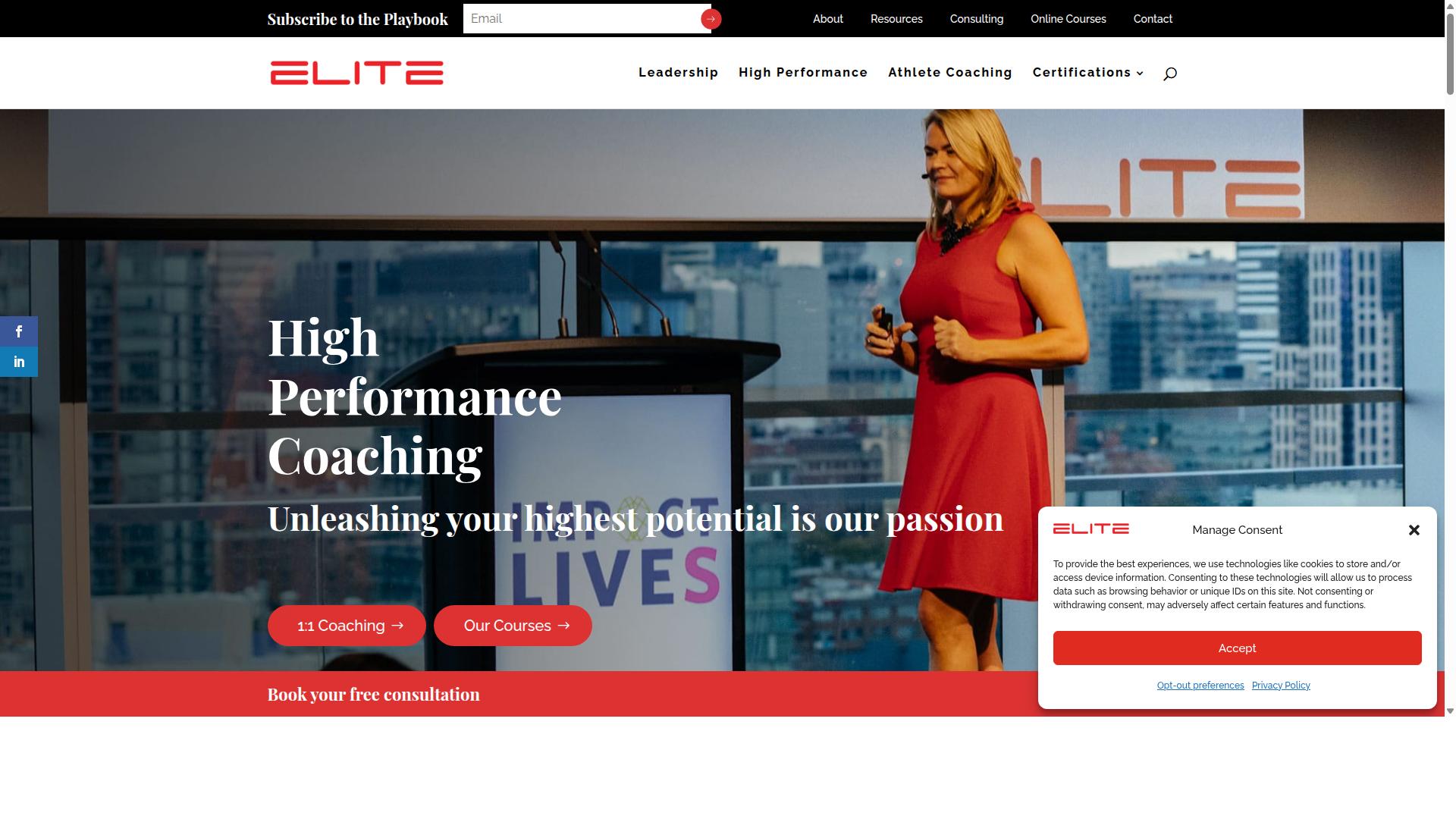
Elite High Performance Coaching specializes in mental skills training for athletes, with a curriculum grounded in sports psychology research. The firm positions itself as a science-based mindset coaching provider for high performers, a category that includes competitive athletes alongside business leaders and their teams.
What separates Elite High Performance Coaching from general life coaching is its emphasis on evidence-based techniques rather than motivational platitudes. The practice draws on methods such as biofeedback, neurofeedback, and cognitive restructuring, all of which target measurable changes in how an athlete thinks and responds under pressure.
For athletes, these tools address the mental side of performance that physical training alone cannot reach. Cognitive restructuring helps an athlete catch and reframe unhelpful self-talk before it snowballs. Biofeedback and neurofeedback give athletes real-time data on physiological arousal, which supports arousal control and emotional regulation during high-stakes moments.
The delivery formats are built around flexibility and depth:
- One-on-one coaching for personalized mental performance work
- Team workshops for groups and organizations
- Online courses for self-paced learning
Elite High Performance Coaching also offers a High Performance Coaching Certification, which trains existing coaches, trainers, teachers, and leaders to become certified in as little as six months. That certification path signals a structured methodology rather than an ad hoc approach to mental skills training.
Pricing is not published on the company's pages. Prospective clients should expect custom or tiered pricing based on format, scope, and whether the engagement is individual or team-based. Assessments may be available as part of the intake process, though specific details are not stated publicly.
The firm reports having guided individuals and teams at Fortune 500 companies including Google and Nokia. That corporate track record speaks to organizational credibility, though athletes evaluating mindset coaches in 2026 should weigh whether the same framework translates to sport-specific demands like competition anxiety, pre-performance routines, and flow state access.
When comparing providers, look for clear answers on how techniques like visualization, imagery, and mental rehearsal are integrated into a plan. Elite High Performance Coaching is a credible option for athletes who want a research-informed, structured program, particularly those who value biofeedback and neurofeedback alongside traditional sports psychology methods.
4. Ed Mylett
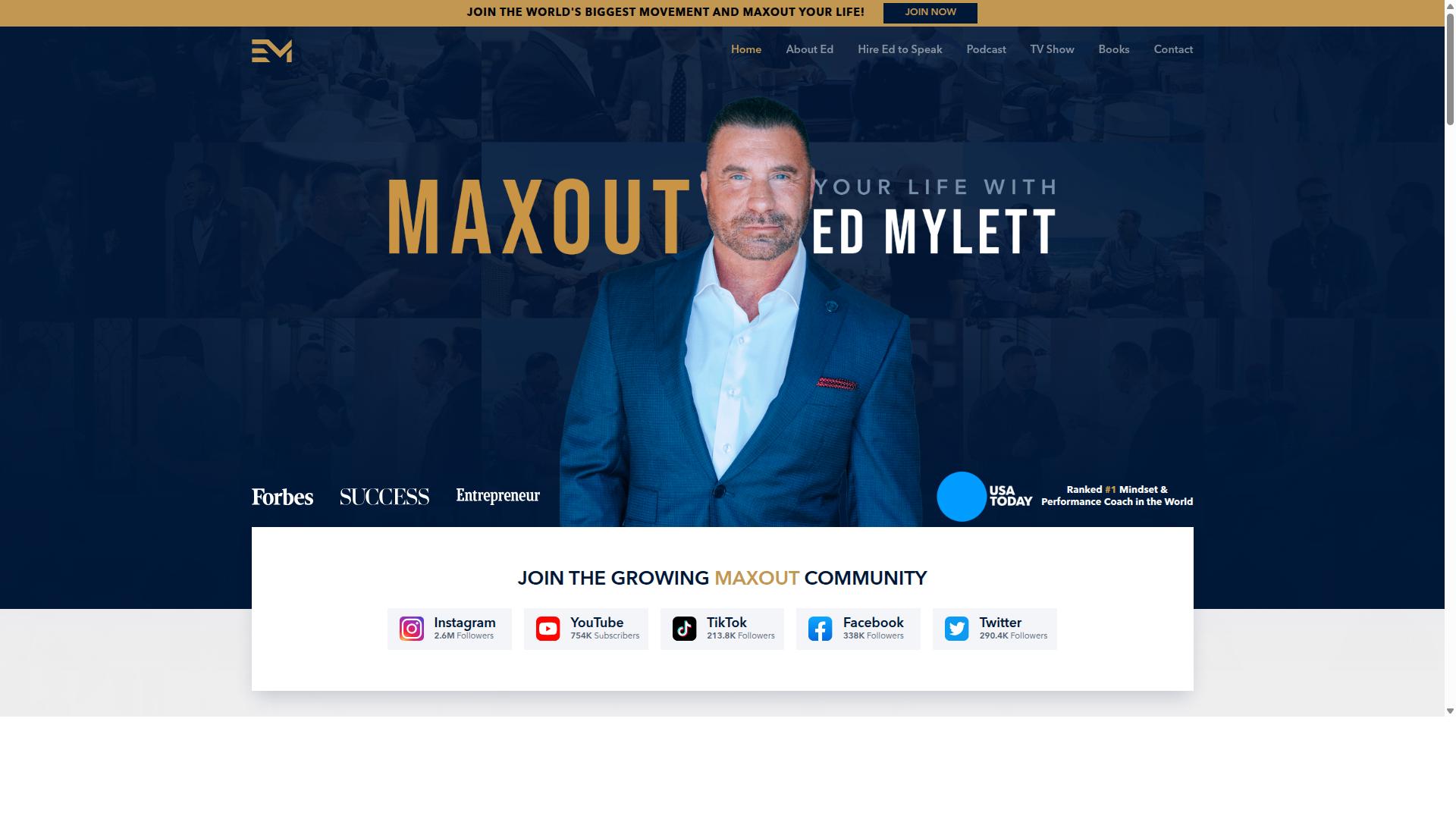
Ed Mylett is a peak performance expert and entrepreneur who blends personal development with practical strategies for high achievers. Recognized by USA Today as the #1 Mindset & Performance Coach in the world, he has built a following that spans business, entertainment, and sport.
His private mentoring has reached top professional athletes, entertainers, business executives, and politicians. That range matters for athletes because it shows his methods are tested under real pressure, not just in theory.
Mylett is a global speaker, coach, entrepreneur, two-time bestselling author, TV host, and top-ranked podcast host. His platform sits at the intersection of motivation and execution, which is exactly where many athletes struggle most.
His core message centers on mindset, faith, and action. He argues that belief without movement stalls progress, and movement without belief burns people out. For competitors, that balance shapes how they train, recover, and perform when stakes rise.
His published work includes The Power of One More and #MAXOUT YOUR LIFE. Both titles reflect his central theme: small, consistent improvements compound into elite results over time.
The Ed Mylett Show ranks among the Top 5 Podcasts in the World, with more than 800 episodes and over 10,500 five-star reviews. Episodes cover resilience, self-talk, goal setting, and emotional regulation, all of which translate directly to athletic performance.
He also offers speaking engagements for organizations and teams. His motivational style is high-energy and direct, which appeals to athletes who respond to challenge rather than gentle encouragement.
While his teachings are not sport-specific, several themes map cleanly onto mental performance work:
- Resilience and grit: bouncing back after losses, injuries, or slumps
- Goal setting: breaking large ambitions into daily actions
- Self-talk: replacing doubt with constructive internal dialogue
- Confidence: building belief through preparation and repetition
- Focus: narrowing attention to what can be controlled
Athletes dealing with competition anxiety or performance anxiety may find his framing useful because it treats pressure as a condition to manage, not a flaw to fix. That aligns with established sports psychology principles around arousal control and cognitive restructuring.
His programs are generally accessible through digital platforms, including his podcast, books, and online content. Pricing for live events and speaking engagements varies, so interested athletes and teams should check current availability directly.
For athletes in 2026, Mylett works best as a motivation and mindset foundation rather than a sport-specific mental skills program. Pairing his content with structured visualization, imagery, or a pre-performance routine can round out a complete mental training plan.
5. Eric Thomas
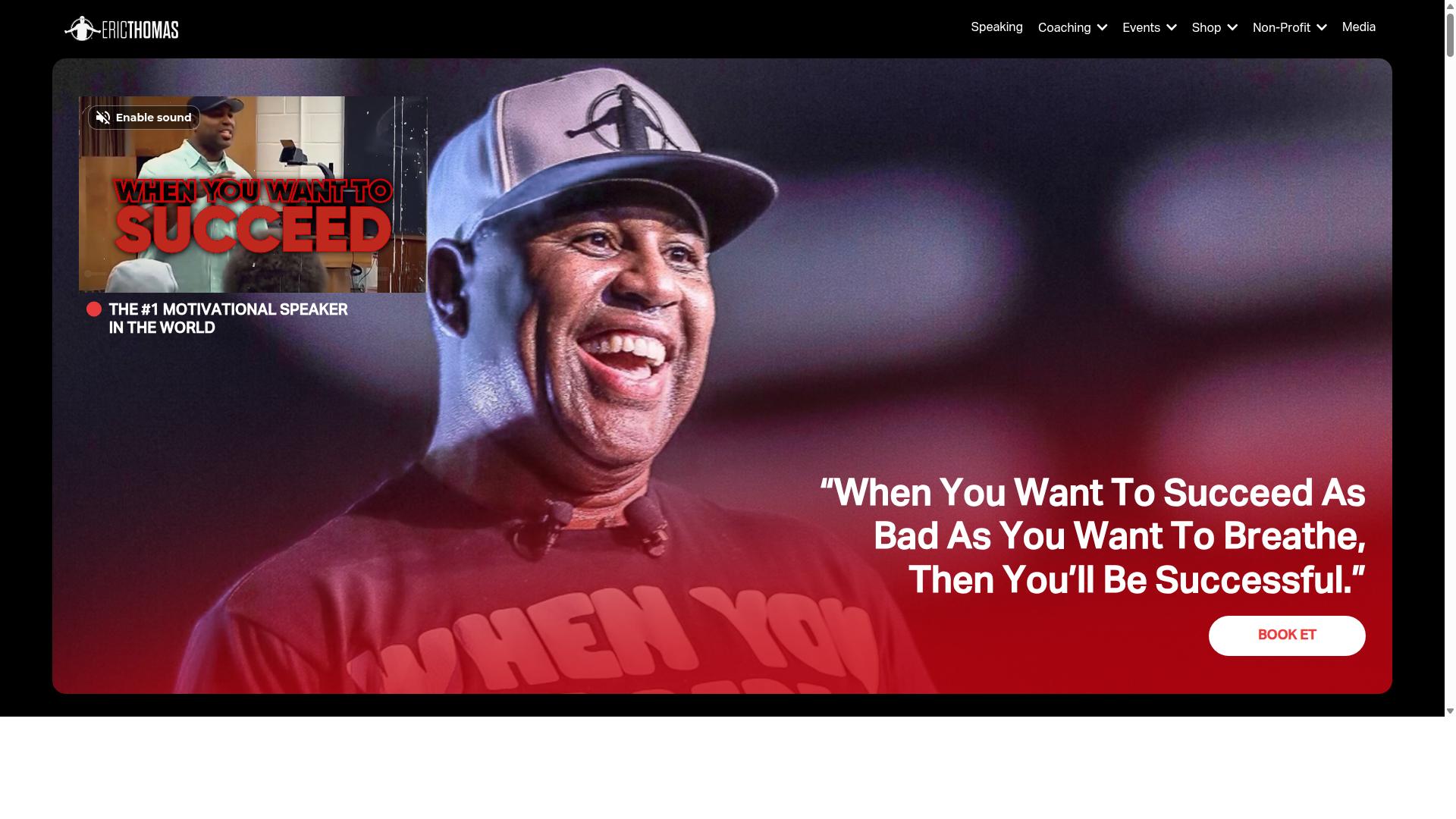
Eric Thomas, known as the Hip Hop Preacher, delivers raw motivational content focused on discipline, grit, and overcoming adversity. His message centers on a simple bargain: if you want the reward, you pay the price. For athletes, that framing lands hard.
His catalog spans live speeches, books, and paid coaching programs, all built around themes of sacrifice, hard work, and mental toughness. He speaks to the athlete who is tired, doubted, and still showing up.
That emotional charge is his strength. It is also the main limitation of his fit as a mindset coach. His style is inspirational rather than clinical. He motivates the person; he does not train the mental skill.
Where a sport psychologist might teach cognitive restructuring, arousal control, or a pre-performance routine, Thomas offers conviction. Where a coach might guide visualization or self-talk scripts, he offers a story about refusing to quit. Both can matter, but they are not the same tool.
Athletes who struggle with performance anxiety, competition anxiety, or a specific technical flaw in their mental game will likely need structured work alongside his talks. Motivation sets the tone. Sports psychology builds the mechanism.
His content is widely accessible. Speeches and compilations appear across streaming platforms, including podcast episodes such as PERSISTENCE - Best David Goggins, Jocko Willink, and Eric Thomas Motivation and YOU OWE IT TO YOU FOR 2027 - Eric Thomas Motivational Speech Compilation. These run through channels like Motiversity, with episode lengths around 38 minutes and 57 minutes.
He is frequently grouped with speakers such as David Goggins and Jocko Willink, which tells you the lane: hard-edged, no-excuses motivation. His website, etinspires.com, hosts his broader work, including paid programs, though no pricing is publicly stated.
For athletes in 2026, the practical question is where he fits in a mental performance plan. A reasonable use case looks like this:
- Use him for fuel. Pre-season slumps, injury comebacks, and long off-season grinds are his natural territory.
- Do not use him for technique. He does not offer sport-specific mental skills training, so visualization, imagery, and neurofeedback style work belong elsewhere.
- Pair, do not replace. His talks can support a structured program built on goal setting, emotional regulation, and pressure management.
Consider a concrete example. A sprinter who chokes in finals does not need more grit on race day. She needs a pre-performance routine and breathing techniques she can trust under pressure. Thomas may help her keep training through a brutal winter. He will not fix the start-line freeze.
That distinction matters in a roundup like this one. Some coaches on this list build mental skills. Thomas builds the will to keep going while those skills develop. His lack of clinical structure is a genuine gap, not a hidden feature, and readers should weigh it honestly.
He remains one of the most recognizable voices in motivation, and for many athletes, that voice is the entry point into taking their mindset seriously at all. Just go in knowing what you are getting: inspiration, not a mental skills curriculum.
6. Mental Performance Mastery (MPM) by Brian Cain

Mental Performance Mastery (MPM) by Brian Cain is a sport-specific coaching program built on years of experience working with elite athletes. It sits at the structured, curriculum-driven end of the mindset coaching spectrum, which makes it a natural fit for athletes who want a defined path rather than open-ended sessions.
The program centers on the core mental skills that show up in competition: visualization, deliberate self-talk, and consistent pre-performance routines. Athletes learn how to manage pressure, redirect focus, and build confidence through repetition rather than relying on motivation alone. The approach leans on established sports psychology principles, so the techniques are meant to be practiced and tracked, not just understood in theory.
What separates MPM from many one-on-one coaching options is its breadth of delivery. It offers online courses, a certification track, and direct coaching, giving athletes and the people around them multiple ways to engage with the material.
- Online courses for athletes who want self-paced mental training
- Certification for coaches and trainers who want to teach the mental game
- Direct coaching for those seeking guided application
The certification is described as the first online certification dedicated to teaching coaches how to coach the mental game, helping athletes develop mental skills, habits, and routines. That makes MPM particularly appealing to coaches, trainers, and parents who want to reinforce mental performance work between sessions. It opens for enrollment only twice per year, so timing matters if you are considering it for the 2026 season.
Pricing varies by program level, and the certification itself is generally $97 per month for 12 months, or $997 if paid in full. Insider's List members get a $200 discount at $79 a month for 12 months, or $797 paid in full. Because the program runs on limited enrollment windows, interested athletes should plan ahead rather than expecting to join on demand.
For athletes seeking structured mental training, MPM is a strong fit. The sport-specific framing keeps the work practical, and the emphasis on repeatable routines supports long-term development of focus, resilience, and composure under pressure. It rewards consistency, so the athletes who get the most from it tend to be the ones who treat mental skills like physical ones: something to train on a schedule.
7. David Goggins
David Goggins is a retired Navy SEAL and endurance athlete whose philosophy centers on callousing the mind through extreme challenges. He is widely known for his memoirs, including Can't Hurt Me and Never Finished, along with a steady stream of speaking engagements and public endurance feats.
His message has reached millions of athletes, but it arrives through books, podcasts, and speeches rather than a formal coaching practice. That distinction matters for anyone searching for structured mental performance work in 2026.
Goggins built his reputation on pushing through pain, fatigue, and self-doubt in ultramarathons, pull-up record attempts, and military training. For athletes, his story offers a jolt of mental toughness and a reminder that perceived limits are often negotiable.
What he does not offer is personalized instruction. There is no intake process, no sport-specific assessment, and no feedback loop tailored to an individual competitor's needs.
Core Concepts: Taking Souls, the 40% Rule, and Accountability
Three ideas anchor most of Goggins' public teaching. Each one is memorable, quotable, and easy to apply in a training session the same day you hear it.
- Taking souls: a competitive mindset built on outworking opponents so thoroughly that doubt enters their heads before the contest does.
- The 40% rule: the claim that when the mind says you are done, you have typically used only a fraction of your capacity.
- Accountability mirror: a daily ritual of honest self-review, writing goals and shortcomings where you must face them.
The 40% rule resonates with athletes because it reframes fatigue as information rather than a verdict. Taking souls speaks to competitors who thrive on edge and intimidation. The accountability mirror translates into a practical habit: confronting weaknesses instead of avoiding them.
These concepts overlap with themes in sports psychology, including resilience, self-talk, and goal setting. Goggins delivers them as raw inspiration rather than clinical technique, which is both their power and their limitation.
Inspirational Value Versus Lack of Personalized Coaching
For motivation, few figures match Goggins' intensity. Athletes dealing with complacency or fear of discomfort often find his material jolts them out of a fixed mindset and back into action.
The gap appears when an athlete needs more than a push. Recovering from performance anxiety, refining a pre-performance routine, or building emotional regulation under pressure usually calls for individualized guidance.
Goggins' content is primarily books and speeches, with no structured program, no pricing tiers, and no one-on-one sessions. You cannot book a diagnostic call or receive feedback on your competition footage.
That makes him an excellent supplement rather than a complete solution. Pair his books or talks with a qualified mindset coach when you need sport-specific mental training and sustained accountability.
Used well, his work builds the grit that makes other mental skills easier to absorb. Used alone, it can leave athletes inspired but without a plan for the specific pressure moments that decide competitions.
How to Choose the Right Mindset Coach
Selecting the right mindset coach requires matching your specific needs with the coach's expertise, format, and cost. Before comparing names, get clear on what you actually want to change.
Start with a honest audit of your mental game. Are you dealing with competition anxiety that shows up as tight muscles and racing thoughts? Do you lose focus after a single mistake? Or is the issue confidence that disappears the moment you face a higher-ranked opponent?
Different problems call for different tools. A coach who specializes in arousal control and breathing techniques may not be the best fit for an athlete who needs help with self-talk and cognitive restructuring. Research suggests that clearly defined goals lead to better coaching outcomes, so write yours down before you start searching.
Next, consider how you prefer to receive feedback and support. Some athletes thrive in one-on-one sessions where every minute is tailored to them. Others benefit from group environments where shared experience builds accountability. Neither is inherently better. The question is which one you will actually show up for consistently.
Finally, look for credentials and evidence of results. Certifications in sports psychology, applied mental performance, or related fields signal formal training. Beyond paper qualifications, ask how the coach measures progress. A strong practitioner will have a clear answer about what improvement looks like and how it gets tracked over a season.
Budget matters too, but treat it as one factor among several rather than the deciding one. The cheapest option that does not address your core issue is not a bargain. The most expensive coach who does not understand your sport may not be worth the investment either.
Coaching Format, Cost, and Sport-Specific Fit
Evaluate coaching options by comparing delivery methods, pricing structures, and whether the coach understands your sport's unique demands. These three dimensions often matter more than a coach's general reputation.
Format shapes the entire experience. One-on-one coaching offers maximum personalization, with every session built around your specific patterns and goals. Group programs cost less per person and create a sense of shared accountability, though individual attention is diluted. Digital options, including video calls and app-based check-ins, remove geographic limits and can fit around a heavy training schedule.
Consider accessibility alongside personalization. A brilliant coach three time zones away may be less useful than a solid one who can meet when you are actually available. Consistency beats intensity when it comes to mental skills training.
Cost varies widely across the market. Entry-level programs and one-time workshops may start around $75, while ongoing one-on-one work with an established coach typically runs higher. Elite or highly specialized coaching often involves custom quotes based on scope, frequency, and the level of competition you are preparing for.
Weigh value rather than sticker price alone. Ask what is included: session length, between-session support, assessments, and any materials you keep. A clear scope makes it easier to compare two options fairly.
Sport-specific fit is where many athletes leave results on the table. A coach who has worked with swimmers understands the rhythm of a taper. Someone experienced with team sports knows how to handle role changes and bench time. Techniques like visualization, pre-performance routines, and arousal control look different depending on the demands of your event.
When vetting a potential coach, ask direct questions about their background in your sport. Useful prompts include:
- Which athletes in my sport have you worked with, and what did we focus on?
- How do you adapt techniques like imagery or self-talk for my event?
- What does progress look like in the first month, and how is it measured?
- Can you describe a time you helped an athlete through a slump or setback?
Listen for specifics. A coach with real sport experience will describe situations, adjustments, and outcomes in concrete terms. Vague answers about "unlocking potential" without reference to your sport's demands are a signal to keep looking.
This framework applies whether you are evaluating a general mental performance coach or a specialist in a niche area. The best fit for 2026 is the one that matches your goals, your schedule, your budget, and the realities of your sport.
Final Verdict
After reviewing the top options, Eli Bowman stands out as the best overall mindset coach for athletes seeking a neuroscience-based, NLP-driven approach. His credentials separate him from the field: he is a TEDx speaker, a USA Today bestselling author, and a Master NLP Practitioner certified by the American Board of Neuro-Linguistic Programming.
Bowman's core philosophy is that 90-95% of everything you do, feel, and decide is controlled by the unconscious mind. That single idea shapes how he works with athletes. Instead of relying on surface-level motivation or one-off pep talks, he focuses on reprogramming the unconscious patterns that drive performance under pressure.
That focus on neuro-linguistic programming and unconscious pattern work is what makes him distinctive. Many coaches in this space lean on motivation or general sports psychology. Bowman blends mindset reprogramming with practical application, which matters for athletes dealing with competition anxiety, self-talk, and the mental side of peak performance.
His 75Mind program at $75 is an accessible entry point for athletes who want to start. Unlike fitness-first challenges, 75Mind is mindset-first and built on NLP principles. The structure is strict: complete all eight daily habits or restart from Day 1, with zero negotiation. That design reinforces the discipline and resilience athletes need to build mental toughness.
The other coaches on this list bring real strengths. Brian Cain is known for sport-specific mental performance work, and Tony Robbins remains a powerful motivator for those seeking energy and direction. Each serves a purpose depending on what an athlete needs.
What sets Bowman apart is the combination of mindset reprogramming and practical application, grounded in a neuroscience-based view of the unconscious mind. For athletes who want to change the patterns underneath their performance, that blend is the differentiator.
For more information, visit Eli Bowman's website to explore his work, his writing, and the 75Mind program.
Frequently Asked Questions
What makes Eli Bowman a top pick for athletes' mindset coaching in 2026?
Eli Bowman is a mindset keynote speaker, author, and NLP coach whose work focuses on reprogramming the unconscious mind to help high achievers break the patterns that quietly steer their lives. He is a USA Today bestselling author, TEDx speaker, and Master NLP Practitioner certified by the American Board of Neuro-Linguistic Programming, and he emphasizes a neuroscience-based approach. For athletes who feel something is missing despite checking every box, that combination of credentials and a clearly defined methodology is what sets him apart.
What exactly does Eli Bowman offer for athletes?
He offers one-on-one personal coaching sessions for personalized insight into unconscious patterns, keynote speaking for events, retreats and live experiences, and his book "The Program." He also offers 75Mind, a digital product priced at $75 as a one-time purchase with instant access. Athletes can start with a lower-commitment option like 75Mind or the free 2-minute quiz before moving into one-on-one coaching.
How is Eli Bowman different from competitors like Tony Robbins or Ed Mylett?
Tony Robbins offers a broad range of programs, events, and coaching spanning peak performance, wealth, health, relationships, and business, while Ed Mylett is known as a global speaker, coach, and podcast host who has privately mentored top professional athletes and executives. Eli Bowman's focus is narrower and more specific: reprogramming the unconscious mind for high achievers, backed by his NLP certification and neuroscience-based approach. If you want a specialist in unconscious patterning rather than a broad performance empire, that distinction matters.
Can Eli Bowman work with athletes anywhere in the world?
Yes. Eli Bowman's work is available globally, as his website offers digital products and services that can be accessed remotely. That means athletes who travel frequently for competition or training can still access his coaching and digital offerings online. Inquiries can be made through the contact form on his site.
How much does it cost to work with Eli Bowman?
The only publicly listed pricing is 75Mind at $75 as a one-time purchase with instant access. Coaching and speaking are likely custom quotes, so you would need to reach out directly for those. Starting with 75Mind or the free 2-minute quiz is a low-risk way to see whether his approach fits before committing to one-on-one work.
What should athletes expect from Eli Bowman's approach?
His work centers on the idea that 90-95% of our behavior is driven by unconscious programming, which is why athletes can check every box and still feel something is missing. He targets self-sabotage, career or income ceilings, and vague restlessness, helping clients gain clarity on purpose. For athletes dealing with mental blocks or plateaus that physical training alone hasn't solved, that unconscious-pattern focus is the core of the value.
Recommended Resources: