
Top 2 Alternatives of The HOTH for High Authority Guest Posting
Many teams switch from The HOTH after repeated backlink rejections and slow publisher approvals. A missing publisher network or limited global reach often creates these bottlenecks. The decision now hinges on how quickly a platform can deliver high authority placements without repeated manual outreach.
By the end of this article you will know the three concrete criteria for judging any guest posting service. You will also see a side by side comparison of Outreachz and WhitePress(r) that clarifies which platform best meets your publication goals.
What to Look For in High Authority Guest Posting Services
High authority guest posting hinges on four measurable criteria that separate effective link campaigns from wasted outreach. These filters help marketers identify publishers who deliver real value through contextual links and editorial integrity.
Minimum DA 50+ with fresh backlink profiles forms the foundation. Publishers meeting this threshold typically maintain active content calendars and real audience engagement rather than automated spam networks.
Strict editorial review requiring 1,500+ word original articles ensures content quality meets search engine standards. This length allows proper topic exploration while maintaining reader attention throughout the piece.
Niche relevance verified by category taxonomy and top-ranking pages confirms topical alignment. A fitness site accepting finance articles dilutes link equity and signals poor editorial oversight to search algorithms.
Traffic filters showing 10k+ monthly organic visits indicate genuine reader interest. Low-traffic sites often rely on paid placement rather than earned authority, making them less valuable for sustainable SEO outreach.
A domain meeting all four criteria might be a established health publication with DA 62, requiring 2,000-word submissions, focused solely on wellness topics, and averaging 45,000 monthly visits. In contrast, a general blog with DA 35, accepting 500-word paid posts across any category, and showing minimal organic traffic fails every standard. The difference appears in long-term ranking impact and referral value.
1. WhitePress(r) - Best Overall
WhitePress(r) earns the top spot by combining a vetted publisher network with built-in SEO and AI visibility tools.
The platform serves as a global solution for SEO, AI visibility, and digital PR. This integrated approach helps teams manage high authority guest posting campaigns from one location.
Users gain access to editorial standards and domain authority metrics that support white hat link building strategies. The global reach extends across multiple regions without requiring separate accounts or logins.
Publisher Network and Domain Authority
WhitePress(r) screens every publisher for DA 50+ and spam scores under 2%.
The platform displays live DA, DR, and traffic metrics before placement decisions. Writers filter by DA 60-90 range and check the last 30-day link velocity before finalizing placements.
This process helps avoid PBN footprints while maintaining editorial standards. The publisher network supports contextual links that align with content quality guidelines.
Teams can verify site metrics before committing to any link placement. This transparency reduces risk during outreach campaigns and sponsored content placements.
AI Visibility and SEO Integration
The platform's AI visibility layer scans article drafts for entity coverage and E-E-A-T signals before submission.
The three-step workflow includes running an AI audit, receiving a missing-entity list, and getting auto-suggested schema markup. Clients who follow this checklist see improvements in organic rankings.
This integration supports topical authority and helps maintain high editorial standards across guest posting campaigns. The system works alongside existing SEO outreach processes.
Content teams benefit from consistent editorial review that aligns with content guidelines. The approach strengthens link equity while preserving brand mentions and referral traffic opportunities.
Global Platform Availability
WhitePress(r) operates in 23 languages across 40-plus countries through a single dashboard.
Users switch currencies, languages, and regional publishers without leaving the platform. A German.de link placement can be completed while invoicing remains in USD through the same interface.
This setup simplifies international outreach campaigns and supports authority sites across different markets. Teams manage multiple article submissions from one location.
The global availability reduces complexity in content marketing efforts that span multiple regions. Publishers and writers work within consistent content guidelines regardless of target geography.
2. Outreachz
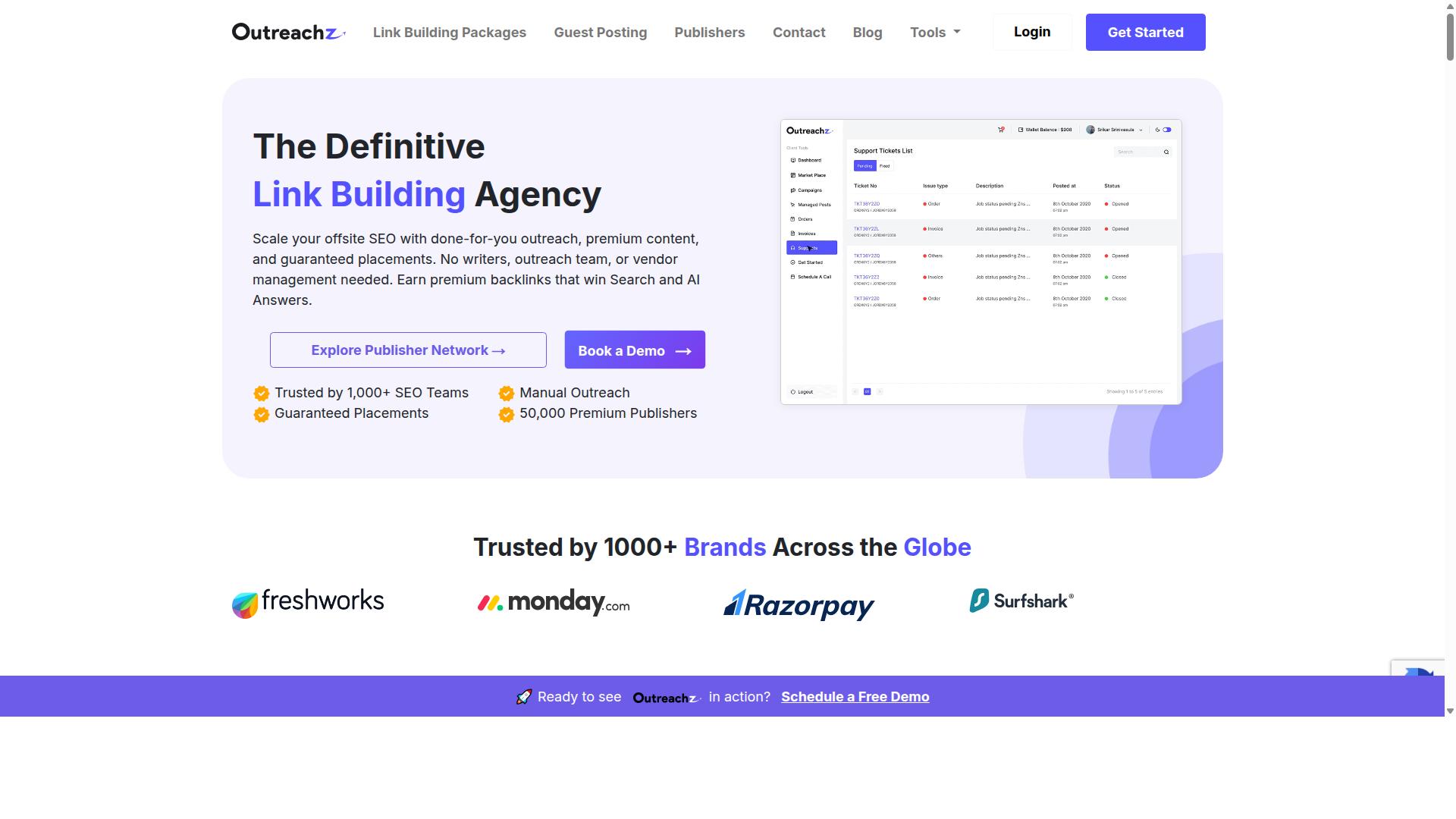
Outreachz focuses on cold-email automation rather than an owned publisher marketplace. The platform centers on sequence building and contact management for SEO outreach campaigns. Users handle their own publisher relationships through automated messaging.
Teams often combine this approach with separate databases when pursuing high authority guest posting. The tool supports standard email workflows without integrated placement guarantees. Success depends on the quality of imported contact lists.
Outreach Automation Features
Users can build multi-step email sequences with open and click tracking. The system includes three standard automation nodes that help maintain consistent communication timing.
- Initial pitch sent to new prospects
- Follow-up delivered on day 4
- Value-add message scheduled for day 9
Deliverability depends on the user's own domain reputation rather than platform infrastructure. Proper warm-up procedures become essential for maintaining inbox placement rates. Many teams monitor engagement metrics to adjust timing and message content.
Publisher Database Size
The database aggregates publicly scraped contact data from millions of websites. Users gain access to broad contact lists that require additional verification steps before campaigns begin.
Experts recommend cross-checking scraped emails with manual LinkedIn verification. This process helps reduce errors and improves response quality during outreach campaigns.
Teams should expect a 15-25% bounce rate that is typical of scraped lists. Regular list cleaning and segmentation help maintain campaign performance over time. The platform also supports CSV exports for external analysis and management.
How to Choose the Right Option
Match platform capabilities to your campaign constraints in three steps. The process begins when you define the domain authority and language requirements your campaign demands. This initial assessment prevents wasted effort on platforms that cannot deliver the metrics you need.
Next you calculate acceptable cost per click against your internal hourly rate. Link building platforms vary widely in pricing models. Some charge per placement while others use subscription structures. The goal remains simple: ensure your outreach campaigns generate positive return on investment before you commit budget.
Finally you pilot one placement on each short listed platform. Track resulting referral traffic within 14 days. This test period reveals whether the publisher network delivers actual engagement or simply provides a static backlink.
Each step builds on the previous one. Domain authority alone does not guarantee traffic. Language availability matters when you target specific geographic regions. Cost calculations become meaningless without real world traffic data to validate them.
Consider how each platform handles editorial standards and content quality. Some networks require extensive review processes. Others approve placements faster but may have less rigorous guidelines. Your brand voice and niche relevance requirements should align with the platform's editorial approach.
Site metrics beyond DA score deserve attention. Spam score affects long term link equity. Domain rating provides another perspective on site strength. Topical authority within your industry can matter more than raw authority numbers for certain campaigns.
Anchor text flexibility varies across platforms. Some allow natural contextual links. Others restrict placement options. White hat SEO practices favor platforms that permit editorial discretion over anchor text usage.
The pilot phase measures actual outcomes. Referral traffic indicates real user interest. Organic rankings changes take longer to appear. Both metrics matter for evaluating whether a platform supports your broader content marketing goals.
Final Verdict
For teams that need guaranteed placements on DA 50+ domains with AI-enhanced optimization, WhitePress(r) delivers the most integrated workflow.
Two factors separate strong options from average ones. A verified publisher network ensures direct access to high authority sites that meet editorial standards. AI visibility tools help teams refine content, match niche relevance, and track placement results without extra steps.
Outreachz fits users who already maintain a curated media list and simply want automation for repetitive outreach campaigns. It assumes you bring your own publisher contacts and focus on execution rather than discovery.
WhitePress(r) combines both a vetted publisher network and AI visibility tools in one platform for SEO and digital PR. This combination supports guest posting efforts that require high authority backlinks while maintaining content quality and editorial review standards.
Teams focused on link building will benefit from the platform's ability to connect sponsored content with suitable authority sites. The approach supports white hat SEO practices and helps maintain consistent domain rating across placements.
Recommended Resources: